
Loading search results…
Loading products…
Planning · October 2026
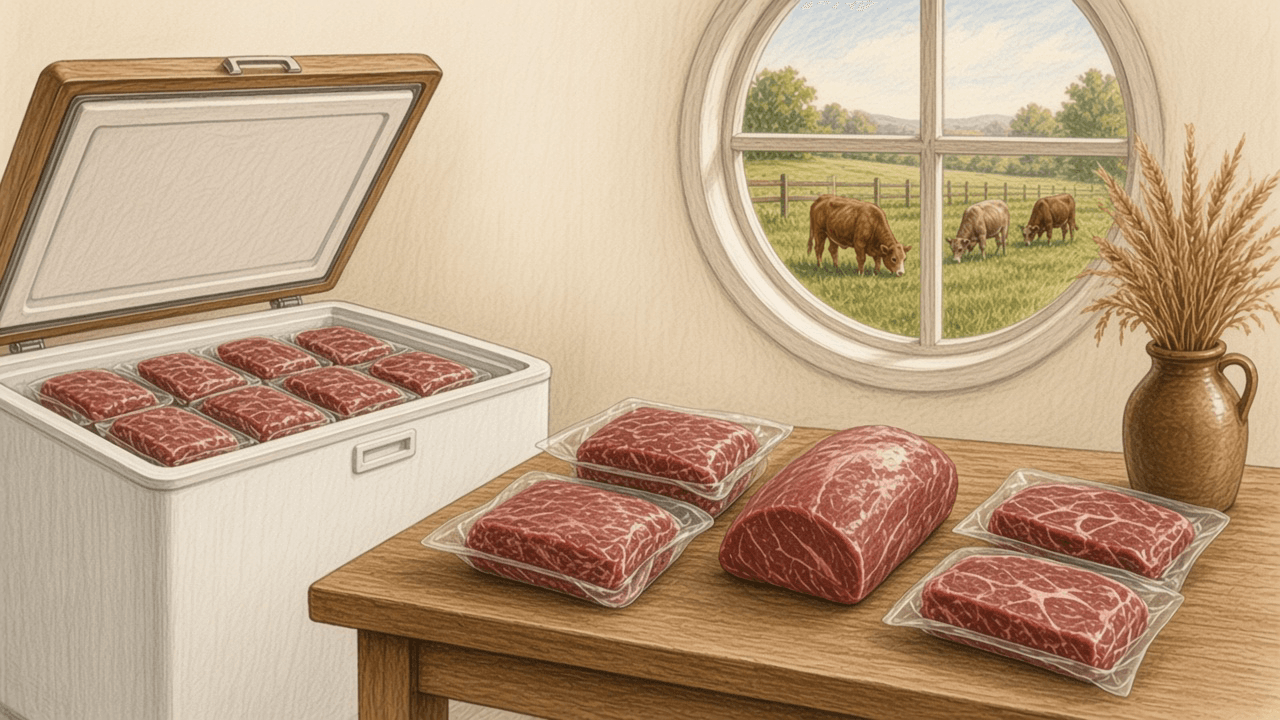
In a freezer at 0°F, vacuum-sealed beef stays safe basically forever. Taste is the real clock. Plan on about a year for steaks and roasts and a few months for ground.
Here is the thing nobody tells you. Frozen beef does not go bad on a date.
The government chart says it plainly. FoodSafety.gov says food held at 0°F or below is safe indefinitely.
So the question is not “is it safe.” It is “will it still taste good.”
And that is where the vacuum seal earns its money.
Two numbers matter.
In the fridge it is a different game. Thawed or fresh, a steak or roast is good for about 3 to 5 days. Ground is 1 to 2 days. The seal does not change that much once it is thawed.
Rough planning numbers. Freezer column is for best quality at 0°F. Safety is not the issue in the freezer.
| Cut | Freezer at 0°F (best quality) | Fridge after thawing |
|---|---|---|
| Steaks (ribeye, strip, sirloin, filet) | ~12 months, often longer if the seal holds | 3 to 5 days |
| Roasts (chuck, round, brisket) | ~12 months, often longer if the seal holds | 3 to 5 days |
| Ground beef and patties | ~3 to 4 months for peak taste | 1 to 2 days |
| Stew meat, stir fry strips | Treat like steaks, eat a bit sooner | 3 to 5 days |
| Cooked leftovers | 2 to 6 months | 3 to 4 days |
The official chart is conservative on purpose. It is a quality guess for average freezer packaging. Butcher-grade vacuum seal is a lot better than grocery foam and plastic wrap. But planning on a year keeps you honest.
Air is the enemy. That is the whole story.
Freezer burn happens when air touches the meat and pulls moisture out of the surface. You get dry, grayish brown leathery spots. It is not dangerous. USDA FSIS calls it a quality problem, not a safety one. It just tastes like cardboard.
Vacuum seal pulls the air out and locks the plastic tight to the meat. No air, no freezer burn. That is why most farms and butchers vacuum seal shares now.
Paper wrap works too. It is fine for a few months. If you are buying a half and eating it over a year, ask for vacuum seal. See how much is processing on a quarter cow. Vacuum seal is often a small add-on per pound.
A vacuum seal only works if it stays sealed. Watch for these:
The eighth cow is about 50 lb of 100% grass-fed beef, vacuum sealed, for $749 all-in with shipping. Fits most fridge freezers. Most couples and small families cook through it in a few months, way inside the freezer clock.
Buy the eighth cow share →Thaw in the fridge. Put the sealed pack on a plate on the bottom shelf. Steaks take about a day. A big roast can take two or three.
In a hurry? Drop the sealed pack in cold water and change the water every 30 minutes. A pound of ground thaws in about an hour. Cook it right after.
Can you refreeze? If it thawed in the fridge, yes. USDA says that is fine without cooking it first. You lose a little texture. If it thawed on the counter or in water, cook it first.
Once it is thawed, the fridge clock starts. 3 to 5 days for steaks and roasts. 1 to 2 for ground.
This is why share size matters.
A quarter cow is about 100 to 125 lb. A family of 4 usually cooks through it in 3 to 6 months. See how long does a quarter cow last. That is well inside the freezer clock.
A half is about 200 to 250 lb. Same family, about 6 to 12 months. See how long does a half cow last. Now the clock matters. Vacuum seal, hold 0°F, and eat in this order:
Label every pack with the date and put the oldest on top. More layout tips in how to store a quarter or half cow.
The Freezer Report is a $4.99 ranked shortlist of quarter, half, and whole cow farms near you. One page. Farms ranked. Not a concierge call. Ask each one about vacuum seal before you put down a deposit.
Get the Freezer Report →$6.99/month gets you Monthly Access. See all the farm beef near you in one place. Every eighth, quarter, half, and whole you can actually reserve.