
Loading search results…
Loading products…
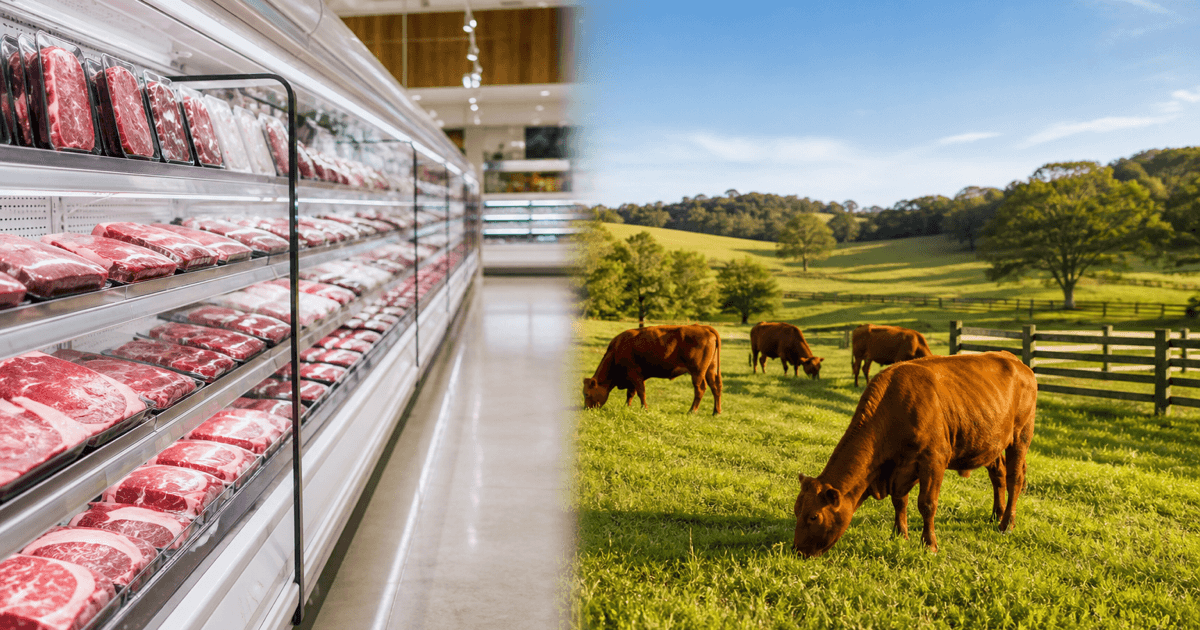
Price check · August 2026
Same freezer. Same family. Completely different receipt. Here are the real screenshots, the cut-by-cut math, and what a ~200 lb half cow actually costs next to Whole Foods.
Okay. Quick story.
I opened Whole Foods delivery and started tapping every cut that shows up in a typical beef share — steaks, ground, stew, brisket, the works. Not “vibes.” Actual shelf prices. Screenshots below.
Then I stacked that against buying direct from a farm: a half cow for about $2,200 all-in for roughly 200 pounds of meat. That's $11.00/lb. One hundred percent grass-fed. From one supplier.
Meanwhile every Whole Foods listing I checked said the same creepy little line: “Meat (Suppliers May Vary).”
Look — if you're paying steakhouse money, you should at least know who raised the animal. Spoiler: the farm route is cheaper and clearer.
A quarter cow is in the same ballpark — roughly $1,100 for about 100–110 lb (~$10/lb). Same idea, smaller freezer hit. We'll run the big comparison on a half because that's where the math gets loud.
This is the table that makes people say “wait… what?” When you buy a half cow, tenderloin and ground both land at about $11.00/lb. At Whole Foods, those are different planets.
| Cut (Whole Foods) | WF price | Farm half | You save | Multiple |
|---|---|---|---|---|
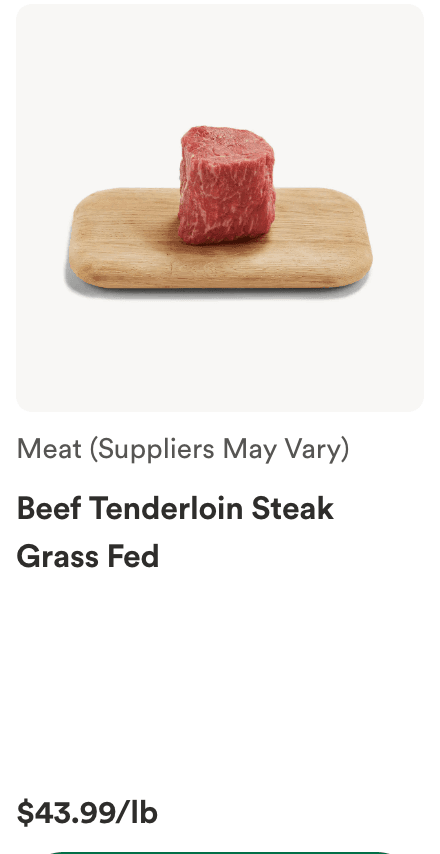
Beef Tenderloin Steak Labeled grass-fed · Suppliers may vary | $43.99/lb | $11.00/lb | +$32.99/lb | 4.00× |
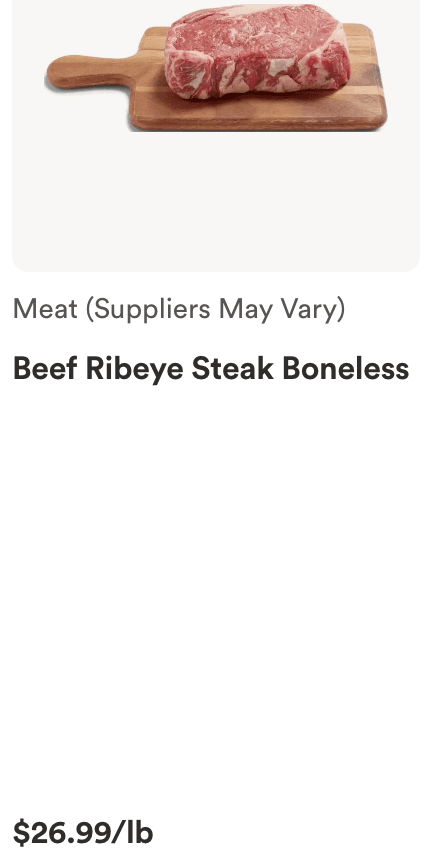
Beef Ribeye Steak (Boneless) Not labeled grass-fed (real GF would cost more) · Suppliers may vary | $26.99/lb | $11.00/lb | +$15.99/lb | 2.45× |
Boneless Beef Loin NY Strip Steak Not labeled grass-fed (real GF would cost more) · Suppliers may vary | $26.99/lb | $11.00/lb | +$15.99/lb | 2.45× |
Beef Loin Flank Steak Labeled grass-fed · Suppliers may vary | $23.99/lb | $11.00/lb | +$12.99/lb | 2.18× |
Beef Top Sirloin Steak Labeled grass-fed · Suppliers may vary | $17.99/lb | $11.00/lb | +$6.99/lb | 1.64× |
Beef Chuck Brisket Flat Cut Labeled grass-fed · Suppliers may vary | $16.99/lb | $11.00/lb | +$5.99/lb | 1.54× |
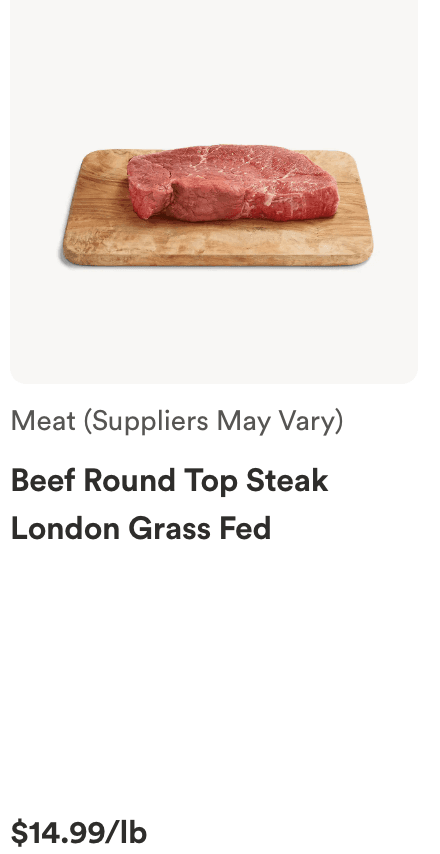
Beef Round Top Steak (London) Labeled grass-fed · Suppliers may vary | $14.99/lb | $11.00/lb | +$3.99/lb | 1.36× |
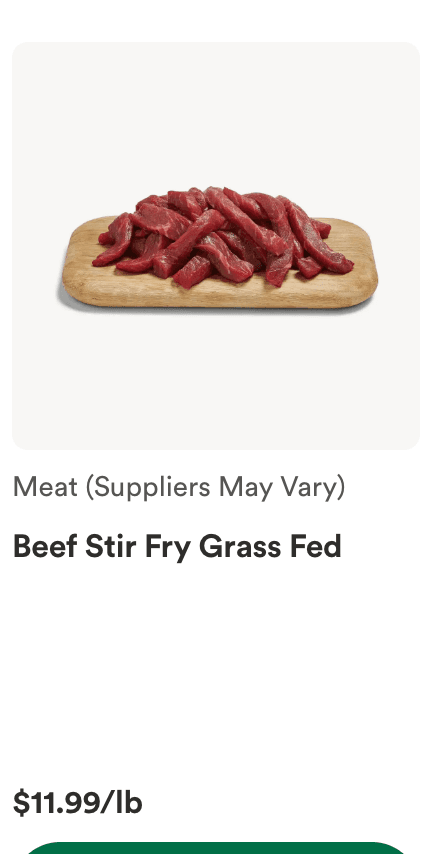
Beef Stir Fry Labeled grass-fed · Suppliers may vary | $11.99/lb | $11.00/lb | +$0.99/lb | 1.09× |
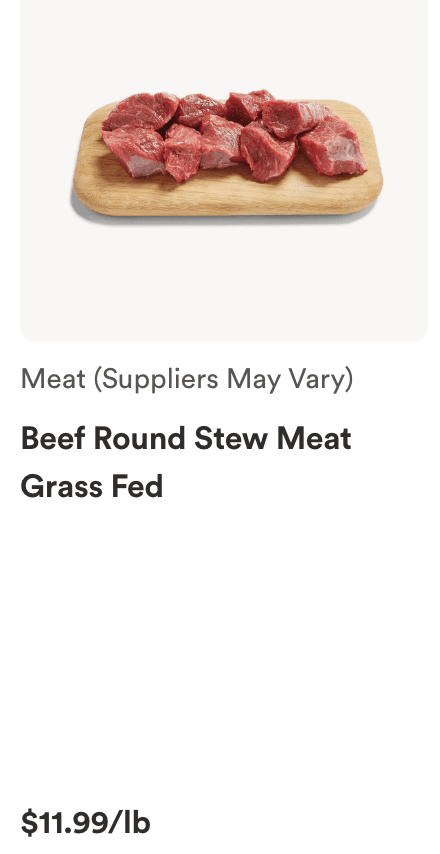
Beef Round Stew Meat Labeled grass-fed · Suppliers may vary | $11.99/lb | $11.00/lb | +$0.99/lb | 1.09× |
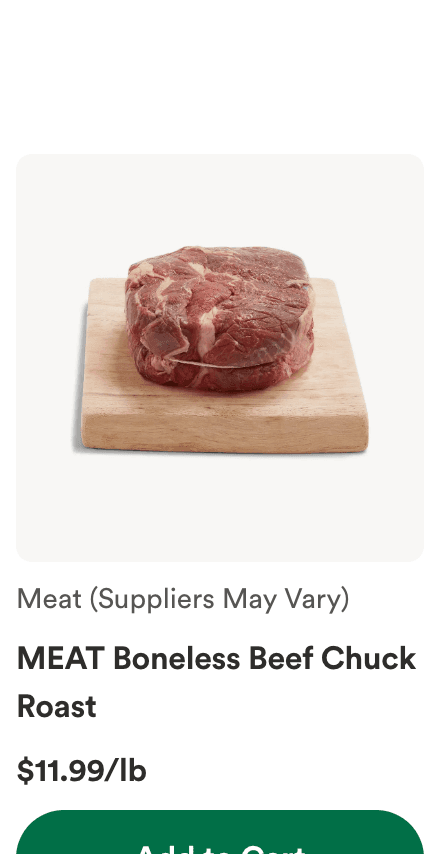
Boneless Beef Chuck Roast Not labeled grass-fed (real GF would cost more) · Suppliers may vary | $11.99/lb | $11.00/lb | +$0.99/lb | 1.09× |
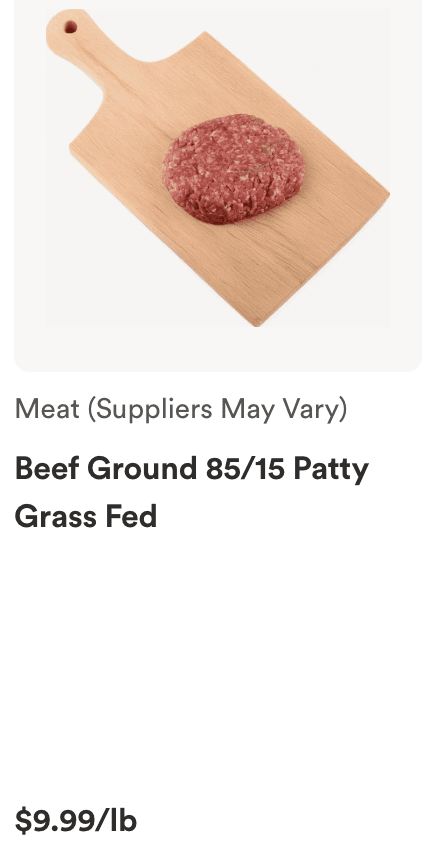
Beef Ground 85/15 Patty Labeled grass-fed · Suppliers may vary | $9.99/lb | $11.00/lb | −$1.01/lb | 0.91× |
Honest note: grass-fed ground at Whole Foods ($9.99/lb) undercuts the farm blended rate. That's fine. You're not buying a half cow for the ground. You're buying it so the tenderloin, ribeye, flank, and sirloin stop living at $18–$44/lb.
I didn't invent these. Here's what Whole Foods was showing — including that “Suppliers May Vary” disclaimer on every single card.
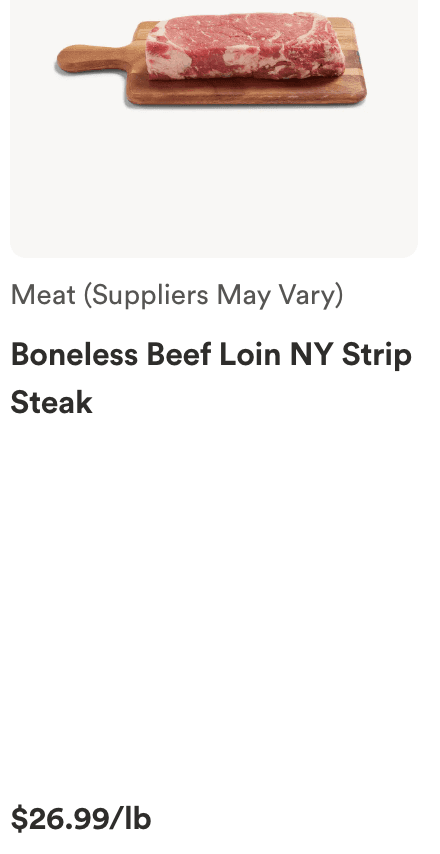
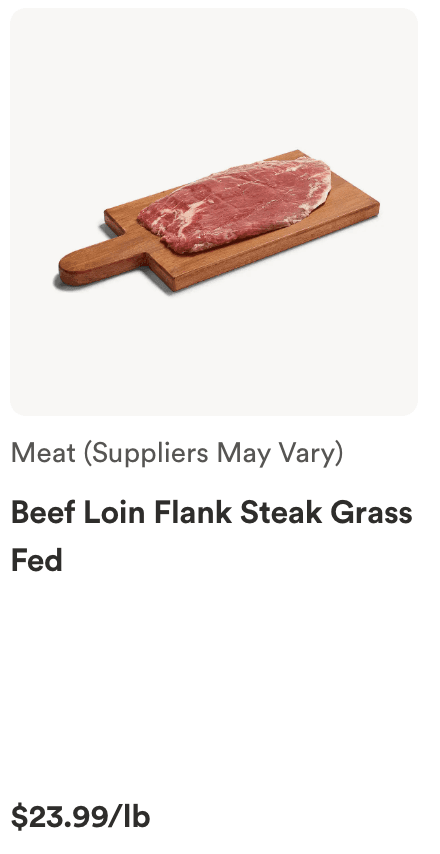
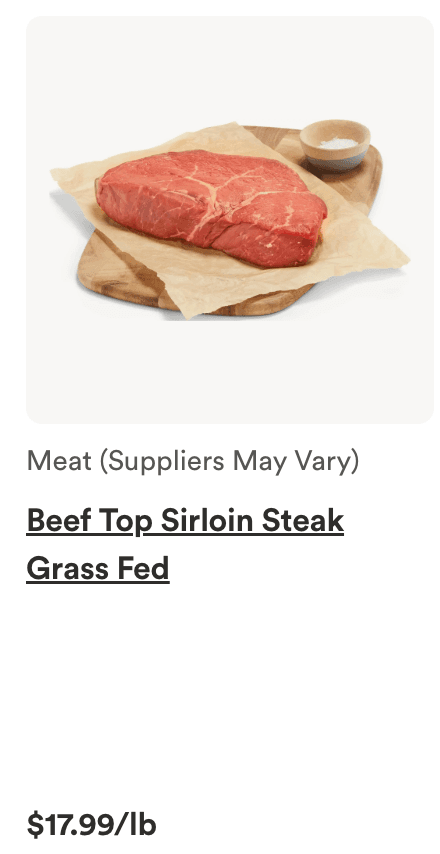
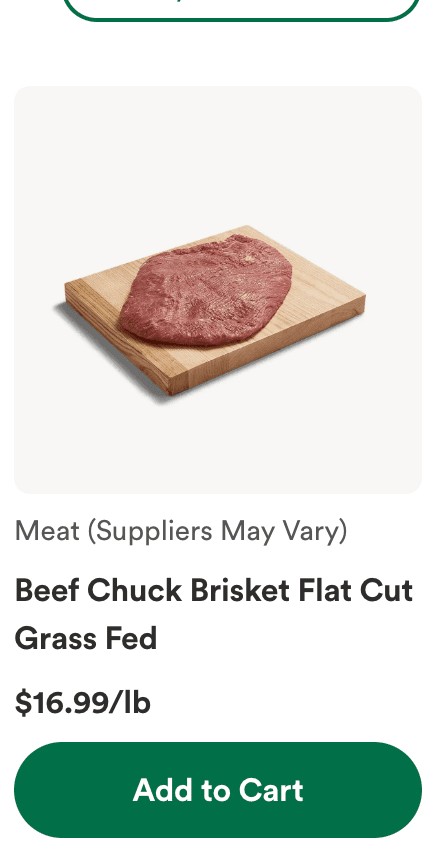
Here's how I'd actually model a share. Typical take-home from a half is about 200 pounds. Ground is usually 30–40% of that — not “almost everything.” The rest is steaks, roasts, brisket, stew, stir fry, etc.
I built a basket at the midpoint (35% ground = 70 lb) using the Whole Foods prices above. Ribeye, NY strip, and chuck roast aren't even labeled grass-fed on the shelf — so this basket is still understating what a true grass-fed grocery rebuild would cost.
| Cut | Lbs | WF $/lb | WF total |
|---|---|---|---|
| Ground beef (grass-fed) | 70 | $9.99/lb | $699 |
| Ribeye (not grass-fed at WF) | 14 | $26.99/lb | $378 |
| NY strip (not grass-fed at WF) | 12 | $26.99/lb | $324 |
| Top sirloin (grass-fed) | 18 | $17.99/lb | $324 |
| Chuck roast (not grass-fed at WF) | 24 | $11.99/lb | $288 |
| Brisket flat (grass-fed) | 14 | $16.99/lb | $238 |
| London / round (grass-fed) | 12 | $14.99/lb | $180 |
| Flank steak (grass-fed) | 10 | $23.99/lb | $240 |
| Stew meat (grass-fed) | 12 | $11.99/lb | $144 |
| Stir fry (grass-fed) | 10 | $11.99/lb | $120 |
| Tenderloin (grass-fed) | 4 | $43.99/lb | $176 |
| Whole Foods rebuild | 200 | $15.55/lb | $3,110 |
| Farm half cow | 200 | $11.00/lb | $2,200 |
Slide ground to 30% and the WF rebuild climbs toward ~$3,200. Slide it to 40% and you're still around ~$3,000. Either way, the farm half at $2,200 wins by roughly $800–$1,000 — before you price in true grass-fed ribeye and strip.
Want the version that makes your jaw hit the floor? Average every unique cut on that list like you're shopping a la carte with no favorites — just “give me beef.”
Equal-weight average
$19.81/lb
Across 11 Whole Foods cuts we screenshot
200 lb at that average
$3,962
vs farm half at $2,200 → save about $1,762 (~44%)
Is equal-weight how a cow is built? No. Is it how people think about grocery beef when they're staring at tenderloin next to ground? Pretty much. Both numbers matter — the realistic basket (~$3,110) and this a-la-carte average (~$3,962). Farm wins either way.
If you only care about the glory cuts — tenderloin, ribeye, NY strip, flank, top sirloin — Whole Foods averages about $27.99/lb. Farm half: still $11.00/lb. That's roughly 2.5× the money for the same pounds… and two of those WF steaks aren't even grass-fed.
Tenderloin alone is a 4× story: $43.99/lb at Whole Foods vs $11.00/lb in a farm share.
That's the whole pitch in one cut. You're not “saving a little.” You're opting out of retail markup on the expensive stuff while the rest of the animal rides along at the same rate.
Every screenshot had it. Same phrase. Same shrug.
Here's the thing: when the label won't commit to a farm, you're buying a category, not a relationship. Grass-fed this week might not taste like grass-fed last week. Traceability is a marketing word until you can name the place.
A half cow from one farm is the opposite model. One animal. One processor relationship. One set of practices. Your freezer is full of meat that all came from the same story — and you paid about $11.00/lb for the privilege.
Also: ribeye and NY strip at $26.99/lb weren't even labeled grass-fed. Chuck roast at $11.99/lb either. So if your bar is “100% grass-fed,” the grocery bill goes up from the numbers in this post. The farm price does not.
If you eat beef more than occasionally and you have freezer space, this is one of those rare “rich people move” that actually saves normal people money. Stop paying for the middle. Buy the animal.
Want the freezer logistics next? See how to store a quarter or half cow or our beef share pricing guide.
Find local farms offering quarter and half cow shares — grass-fed beef from one supplier, priced like you actually know the farmer.
Find farm beef near me